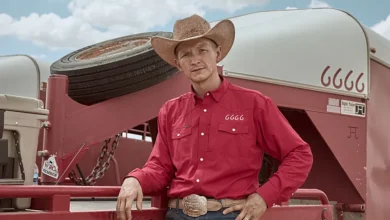

Taylor Sheridan has helped turn Western dramas into one of television’s most recognizable trends, but the man behind Yellowstone isn’t necessarily pleased with Hollywood’s growing appetite for cowboy stories. While networks and streaming platforms have increasingly embraced ranch life, rugged landscapes, and conflicts over land and power, Sheridan has questioned whether the industry’s enthusiasm comes from a genuine appreciation of the genre or simply the desire to repeat his success.
The distinction matters because Sheridan’s influence now stretches far beyond one hit series. From 1883 and Landman to The Madison and Marshals, his television projects have helped establish a recognizable corner of the entertainment landscape. Meanwhile, other productions have explored similar territory, hoping to attract audiences who have demonstrated a strong interest in stories set in the American West.
For Sheridan, however, the popularity of Yellowstone doesn’t necessarily mean Hollywood understands what made it work.
Taylor Sheridan Questioned Hollywood’s Yellowstone-Inspired Trend
The success of Yellowstone sparked a broader wave of Western-themed television, encouraging more productions to explore rural communities, sprawling properties, family conflicts, and life far removed from major cities. Shows such as Ransom Canyon and American Primeval are among the titles that have emerged amid this renewed interest in Western storytelling.
Sheridan addressed the trend in a 2022 interview with Variety, explaining why he wasn’t convinced the growing number of Western dramas was necessarily a compliment.
He suggested that studios were responding primarily to the show’s audience numbers rather than to its creative qualities. In his view, seeing millions of people tune in to Yellowstone encouraged other industry figures to conclude that Westerns could attract viewers, prompting them to develop similar projects.
That perspective offers an interesting look at how Sheridan views his position in television. Although his work has helped bring the Western genre back into the mainstream, he appears wary of the idea that commercial success alone can explain why a particular series resonates with audiences.
After all, a show can inspire a trend without every production that follows it capturing the same qualities that made the original compelling.
The Numbers Show There’s Still a Strong Audience for Sheridan’s Shows
Whatever Sheridan thinks about the industry’s motivations, the appetite for his own projects remains substantial.
Landman performed particularly well during the first half of 2026, accumulating 12.4 billion viewing minutes and ranking as the fourth most-streamed original series during that period, according to the figures cited in the source report.
The broader television season also demonstrated Sheridan’s continued reach. Three of his series — Marshals, Landman, and The Madison — ranked among the top 25 shows of the 2025–2026 television season.
Those results reinforce the commercial appeal of Sheridan’s storytelling across multiple projects. Rather than relying exclusively on Yellowstone, his work has expanded into different corners of American life while maintaining an interest in communities shaped by power, money, loyalty, and competing personal interests.
His projects also vary in setting. While many are closely associated with ranches and Western landscapes, Mayor of Kingstown explores a different environment, showing that his storytelling interests aren’t confined to traditional cowboy narratives.
Still, the success of these shows raises a larger question about what audiences are responding to. Is it the Western setting itself, or is the appeal rooted in the specificity of the people, places, and conflicts Sheridan brings to the screen?
His own background may help explain why he believes that distinction is important.
His Texas Roots Give His Stories a Personal Foundation
Sheridan’s connection to ranch life isn’t simply a creative choice made to capitalize on a popular television trend. His upbringing in Texas has played a significant role in shaping his approach to storytelling.
In a 2020 interview with Texas Highways, Sheridan discussed growing up on a 214-acre Texas ranch and explained how his childhood experiences informed his writing. His family’s ranch, in particular, influenced the world he created for Yellowstone.
That personal connection helps provide context for his commitment to depicting rural life with a sense of familiarity. Rather than treating the American West as a collection of picturesque landscapes and recognizable cowboy imagery, Sheridan draws on experiences that have been part of his life.
His work frequently incorporates the practical realities and social dynamics of the environments he portrays. Land ownership, work, family responsibilities, and the pressures facing rural communities can all become central elements of a story rather than merely serving as background decoration.
This doesn’t mean every storyline is autobiographical. Instead, his own experiences give him a foundation from which to build fictional worlds that feel connected to real places and ways of life.
That approach may also explain why Sheridan has been skeptical of productions that attempt to recreate the surface appearance of his shows without developing an equally convincing sense of place.
Inside the Cowboy Camp That Prepares His Actors
Sheridan’s attention to authenticity extends beyond the writing room. His productions also use a training process commonly known as “Cowboy Camp,” where actors learn practical skills associated with ranch work and Western life.
The preparation can include learning how to handle horses and ride convincingly, helping performers become more comfortable with activities that are essential to the worlds their characters inhabit.
Luke Grimes, who portrayed Kayce Dutton on Yellowstone, discussed the effort involved in learning these skills in a 2022 interview with The Hollywood Reporter. He explained that the cast worked to become as capable as possible, noting that an actor’s genuine ability to ride can make a noticeable difference on screen.
It’s a relatively practical detail, but one that illustrates a larger principle behind Sheridan’s productions. Authenticity isn’t achieved solely through dialogue, costumes, or carefully selected locations. It can also come from the way performers move, work, and interact with their surroundings.
When an actor looks comfortable handling a horse, for example, the scene can feel more natural than one in which the performer appears unfamiliar with the activity.
These details may seem small individually, yet they contribute to the overall credibility of a fictional world. For viewers, that can make the difference between watching actors perform a version of ranch life and feeling immersed in a story shaped by it.
Why Authenticity May Be the Hardest Part to Replicate
Sheridan has previously explained that researching a subject superficially wouldn’t produce the same results as drawing from lived experience. In his 2022 Variety interview, he argued that simply gathering information from sources such as Wikipedia and then attempting to write a story would risk making the result feel inauthentic.
His point goes beyond the Western genre. Any television series built around a specific profession, community, or way of life needs more than recognizable visual details to feel convincing.
A ranch setting might attract viewers initially, but the relationships, routines, conflicts, and practical knowledge that bring that setting to life require a deeper understanding of the subject. Sheridan’s personal background and the preparation undertaken by his actors are two ways his productions attempt to achieve that depth.
Of course, authenticity alone doesn’t guarantee a hit. Strong characters, effective storytelling, and audience interest all contribute to a show’s success. Nor does Sheridan’s perspective mean every other Western-inspired series lacks originality or care.
But his comments highlight a challenge for any industry attempting to reproduce the success of a popular franchise: identifying the elements that audiences appreciate is not the same as successfully recreating them.
With Landman delivering substantial streaming numbers and Marshals and The Madison also finding places among the season’s leading shows, Sheridan’s influence remains considerable.
Hollywood may continue exploring the Western genre for years to come. The more interesting question is whether those productions will develop their own identities or rely primarily on the audience interest that Yellowstone helped demonstrate. For Sheridan, the lasting value of a story may depend on something that can’t be copied simply by putting more cowboys on television: a genuine understanding of the world being portrayed.